Commentary
Operation Access is a good start. Now put people on the trains.
DART starts 90 days of fare checks and uniformed teams at seven rail stations today. That helps. But on a plane, someone in a uniform walks the aisle the whole trip. That's the part DART is still missing.
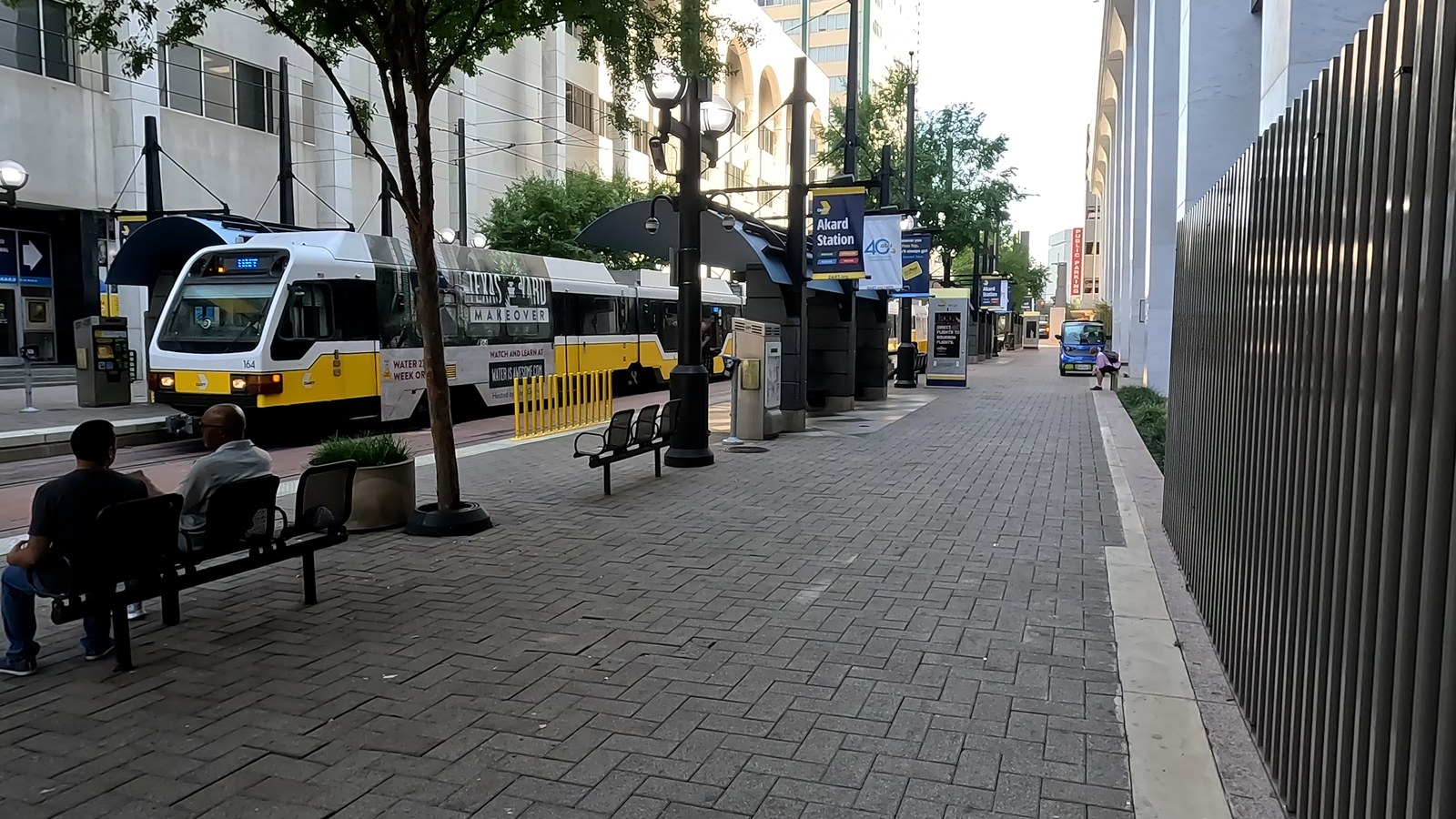
Starting today, if you board a DART train at Pearl/Arts District or West End, you’ll walk through a barrier and show your fare first.
That’s Operation Access, a 90-day push DART announced last week. Along with those two checkpoints, uniformed teams will be posted at Bachman, Forest Lane, LBJ/Skillman, MLK Jr., and 8th & Corinth, and riders should see more DART Police, fare enforcement, and transit security across the system. DART is also tracking how people move through stations while it weighs fare gates down the road.
It’s a good move. It’s also not the first time I’ve heard DART announce a safety push. Putting people on the platforms helps. What’s still missing is people on the trains.
Why nobody acts out on a plane
A friend and I got into this the other day. You hear it all the time: people don’t want to ride a train with a bunch of strangers. Those same people will stand in a long security line, squeeze into a packed flight, and not think twice.
So why do people act out on trains and almost never on planes?
The easy answer is the penalties. Cause trouble on a flight and you’re dealing with the feds. But I don’t think that’s most of it. On a plane there’s always a flight attendant or two walking the aisle. They watch you board, they know where you’re sitting, and they come by every few minutes. Everybody knows someone is paying attention.
On a DART train, the only employee is usually the operator up front in the cab. Nobody walks the car.
The trips aren’t the same, I get that. A flight costs more, people take one a lot less often, and a 20-minute ride across town isn’t a flight across the country. But it’s surprising how much it changes things just to have someone in a uniform standing in the car or walking through it. It doesn’t need to be an officer. A work uniform does most of the job.
Operation Access covers where you get on and off. Once the doors close, you’re on your own until the next stop, and the one after that. That stretch is where people decide whether they’ll ride again.
Some stations need it more than others
To be fair to DART, they didn’t spread people evenly, and they shouldn’t. Some stations need more attention than others. DART says the five outer stations on the list are key entry and exit points for trips to and from downtown, and that covering them gives a “continuous presence” along those corridors. That’s a reasonable way to start.
I’ve ridden enough to know some stops feel sketchy. I’m not going to pretend otherwise. But constant talk about how unsafe the whole system is doesn’t help either. It keeps people off the trains, and fewer riders makes the trains feel emptier and less safe. The Silver Line is the best counterexample I’ve seen. It’s clean and nice, and when I rode it I saw more ticket checks, more workers there to help, and more law enforcement than on any other DART line. People of all types were riding it to the airport. That’s what visible staff buys you.
True stations
The fare-gate data is the part I’m most interested in. If DART had more true stations, an actual building with fare gates you walk through, it would be 100 times better.
That won’t make sense everywhere. Downtown, where the trains run on the street and the platforms sit in the middle of the block, gating every stop would be hard and expensive. It’s a big cost no matter where you do it. But on a lot of the system it would be worth it. A station with a building has a place for staff to be, a reason for people to pay, and a front door. It feels like part of the city instead of a slab next to a parking lot.
Pearl/Arts District and West End are going to be a 90-day test of what a checked entry feels like. I hope DART looks hard at that data and doesn’t shelve it.
Who’s making the call
I’m not the rider people expect. I’m a car guy. I hate traffic. People assume if you ride DART you can’t afford a car, and that’s not me. When I ride, I see college kids, older folks, and people in business clothes.
I’d like to know how many DART executives and Dallas council members ride the train on a regular basis. They’re the ones deciding how much security the trains get. If a council member was on the train and saw something bad, they’d demand more security the next day. Too often riding mass transit gets treated as a second-class way to get around, and the safety budget follows that attitude. I’ve said it before: give city and DART employees free rides and encourage them to use it. The system would get cleaner and safer fast, because those riders won’t put up with less.
What I’d ask for
Operation Access is a good first step, and I’ll be watching how it goes. When the 90 days are up, here’s what I’d want to see:
- Uniformed staff riding the trains, not just standing on the platforms. Fare checkers, ambassadors, whoever. Someone walking the aisle.
- An honest look at the fare-gate data, and true stations where they make sense.
- More decision-makers riding the system they’re deciding on.
I want people to ride DART. I’ve ridden and walked seven stops on the Blue Line and taken it to the State Fair, and I’d rather more Dallas drivers try it too. That’s a big part of what 15 Minute Dallas is about. You get more riders by making the ride feel safe the whole way, not just at the platform.