Commentary
Dallas Finally Drew a Circle Around the Stations. Don't Water It Down.
Draft 1 of the first zoning rewrite in decades gives a half-mile around every light-rail and streetcar stop special rules: more height, more homes, and parking maximums. I've been asking for that since 2023. Density is good if it actually happens, and only if we also plan for families, parks, connections, and safety.
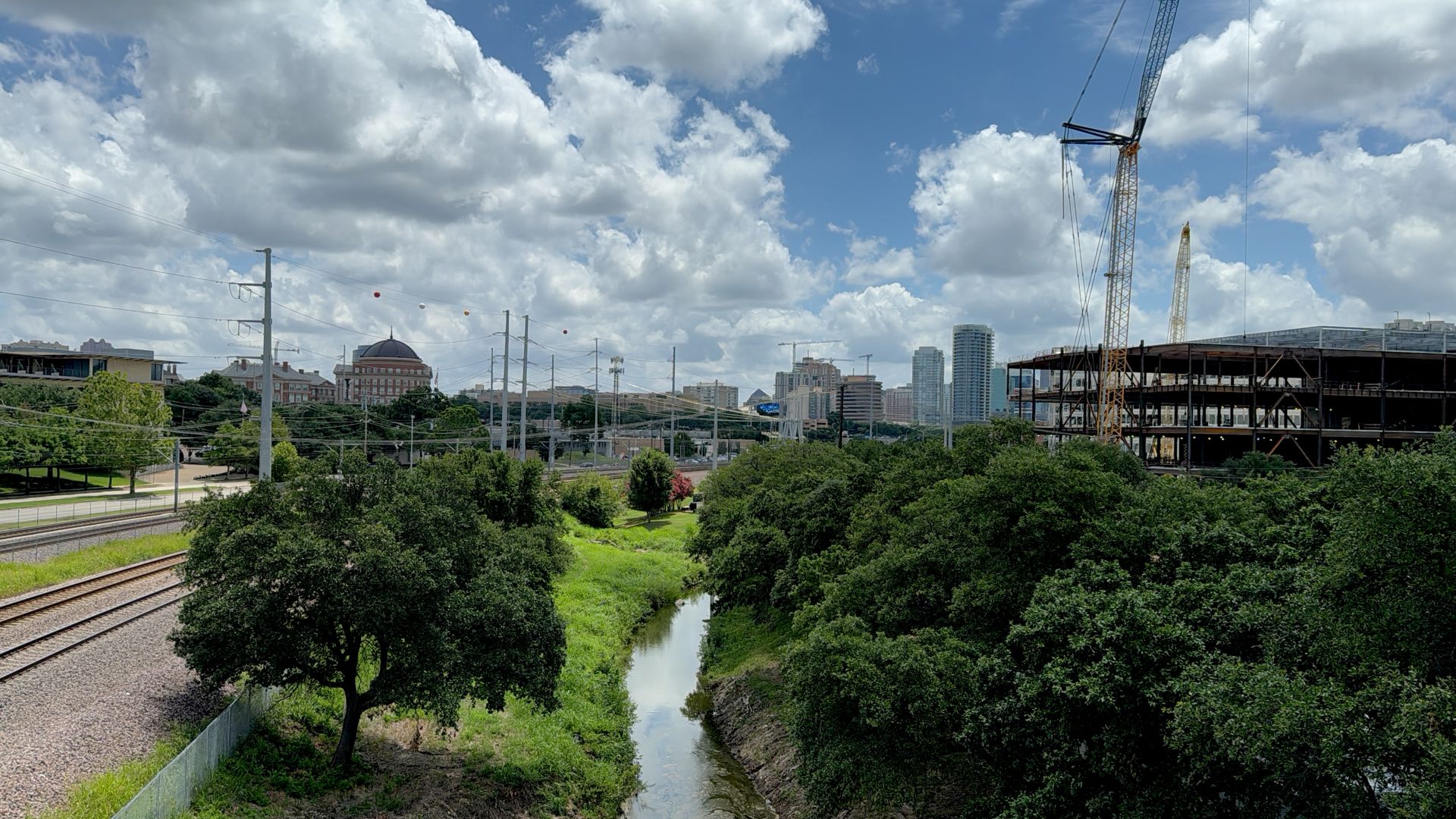
Dallas finally put something in writing that I’ve been asking for for years: special rules in a radius around the train stations.
On November 5 the city released Public Draft 1 of a new development code, the first real rewrite in more than 40 years, meant to turn ForwardDallas 2.0 into actual law. Planning director Emily Liu told the Plan Commission the city wants at least four months of conversation before a second draft. Good. A draft is not a code.
I’ve been saying this since 2023
In October 2023 I wrote that one of the quickest things Dallas and DART could do for ridership was “create special zoning 1/2-1 mile radius around every station encouraging density and car free neighborhoods.” A few months later I asked for “TOD zones with no parking minimums? Half mile radius from all DART stations to start.”
https://twitter.com/adamaoc/status/1713585818869039545
This draft finally does a version of that. The night it dropped I wrote that the half-mile rules around DART stations are the best part: height bonuses, apartments allowed in residential zones, parking maximums, and wider sidewalks. If Dallas maps those station areas generously, this could reshape the city. The city has to be aggressive with it, especially around the stations.
https://twitter.com/adamaoc/status/2118501427861717362
What the half-mile actually does
It is not a new color on the zoning map called “DART district.” Section 11.3 layers bonuses and design standards onto whatever the land is already zoned, for development within one-half mile of a light-rail stop or streetcar station.
Inside that circle, multi-unit and mixed-use buildings can go 20% taller than the underlying district allows. Multi-unit homes would be allowed in the R-1, R-2, and R-3 districts, without the usual “corner lot only” limits. In R-1 and R-2, lots can be smaller, front setbacks drop to five feet, and side and rear setbacks go away. Parking gets a ceiling: one space per home, and one space per 200 square feet of commercial space. Garages belong behind the building, not on the facade that faces the platform. A building within 50 feet of a stop has to put a real entrance toward the station. New sidewalks within a half-mile would have to be eight feet wide.
That’s the special classification. Not the full mile-wide rezone I’ve asked for, but a serious start.
The rest of the draft helps, if the city follows through. Duplexes would be allowed in R-1 and R-2. Accessory dwellings would be allowed across residential districts, up to 24 feet and 900 square feet, without a special board trip every time. There are cottage courts, townhouse districts, and a simpler mixed-use ladder. The city already rolled back parking minimums in May 2025. This draft adds maximums where the trains are. I like the push for infill and density. It only matters if it actually happens.
Look at Mockingbird and Buckner
At SMU/Mockingbird Station, DART is giving up surface parking for 394 apartments and putting rider parking underground. At Buckner, Palladium is building 304 mixed-income homes on what had been an underused DART lot. The zoning draft is how you make that the default, not the exception. I’ve said for a long time that transit isn’t failing in Dallas, the land use around it is. If the half-mile rules survive the hearings, the next Mockingbird gets easier. If they get watered down, we’re back to fighting for every floor and every parking stall.
Don’t forget families, parks, and the walk to the train
I’ve kept saying we should make cities better for families. I raised four kids in the suburbs and in the city. The city wins when you can actually live there, not when the new buildings are only studios. I want three- and four-bedroom units in the places we’re asking people to live without a car. The draft opens the door to more housing types. I did not see a requirement that any of that new density include family-sized homes. That’s a gap.
https://twitter.com/adamaoc/status/1866894839176106190
Parks have to come with the people. The draft carries forward park-land dedication, and buildings with 20 or more units would set aside about 10% of the lot as community space, including playgrounds. Parks like Harwood are what make a dense neighborhood worth staying in. A fee spent years later, somewhere else, is not the same as a park you can walk to on Saturday.
How someone gets from their front door to a train, a grocery store, or a park is a city decision. The draft has some of this right: shorter blocks, a street connectivity index for new subdivisions, alleys in mixed-use and TOD areas, mid-block passages, and those wider sidewalks near stations. Keep those. A half-mile radius means nothing if the last 800 feet is a parking lot, a blank wall, and a street with no safe crossing.
Safety is the precondition
No one will use mass transit, or live in a super dense area, if it’s not safe.
The draft talks about lighting, walkability, and “safe pedestrian access.” That’s design, and design helps. It does not put an officer on a platform or make a street feel all right at 10 p.m. When people complain that transit “brings in bad people,” I’ve said that’s an enforcement problem, not a train problem. Make it safer and cleaner and more people will ride. Zoning can set the table. It cannot do the whole job.
https://twitter.com/adamaoc/status/1917736912787321246
The fight is already visible
On November 2, before the draft went public, Councilman Chad West told FOX 4 the city is in a housing affordability crisis and that zoning has to follow modern trends. “That doesn’t mean mow down single-family neighborhoods,” he said. “But it does mean considering what families in the next 5, 10, 20, 30 years are going to be looking for.” I agree with that last part especially.
The same story quoted Economic Development Committee Chair Jesse Moreno on the other side: “We need to ensure we are not building 3.5-story duplex next to single family.” He wanted planners to visit neighborhoods instead of relying on developer photos.
I’d push back on that. Whether he meant three and a half stories or three to five, that’s not the threat. Townhomes, row homes, duplexes, and fourplexes are all great for neighborhoods. A good mix of housing is what makes a neighborhood work. Dallas is one of the largest cities in the country, in one of the fastest-growing regions in the state. We shouldn’t be limiting options.
Near the train stations, it matters even more. If we’re going to be restrictive anywhere, it should run the other direction: developers near a station should have to build denser and taller, not be capped at something that looks like a cul-de-sac.
At the November 5 Plan Commission briefing, chair Brent Rubin said “the devil will be in the details.” I have not seen a council member go on the record about the published draft itself. Staff was scheduling one-on-one briefings with council offices this week.
What I want next
Don’t shrink the half-mile, and don’t carve so many exceptions that it exists only on paper. Map the station areas generously. Use the comment period to add what the draft is thin on: family-sized units, parks you can walk to, and streets that connect to the platform. And say out loud that safety is a condition of all of this.
If you live near a station, or you want to, this is the window. Read the draft and leave a comment at DallasZoningReform.com. You do not need to write like a lawyer. Starting November 16, copies will be in Dallas public libraries.
From the city’s own list: a virtual Lunch and Learn on November 18, noon to 1:30 p.m.; a zoning panel at 9:15 a.m. on November 20 at the Dallas Housing Coalition Housing Summit, Highland Park United Methodist Church, 3300 Mockingbird Lane, a short walk from Mockingbird Station; the Zoning Ordinance Advisory Committee on December 1 at 9 a.m.; and open houses December 14 at City Hall, December 15 at Fretz Recreation Center, and December 16 at Martin Weiss Recreation Center, 11 a.m. to 1 p.m. and 4 to 7 p.m. More sessions run into January. A second draft is expected in the spring, with adoption maybe around August 2027.
The city finally wrote down a radius around every station. Now we have to keep it, and make sure the neighborhoods inside it are places families will actually want to live.