Explainer
Roads, Streets, and Stroads: Why So Many Dallas Drives Feel Awful
A road should move cars fast between places. A street is a place, where people walk, shop, and live. Dallas builds a lot of roads that try to be both, and they end up failing at each.
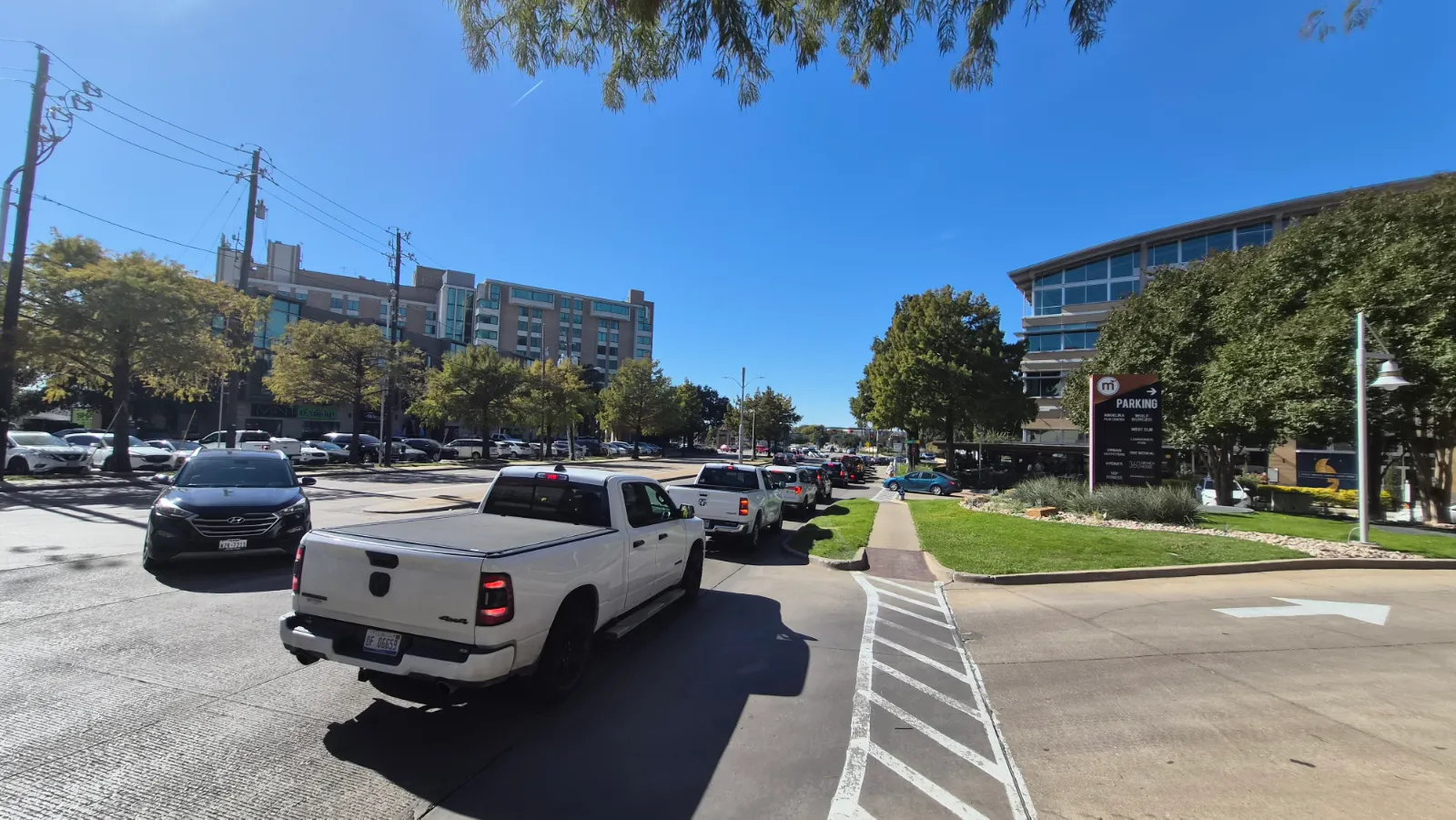
You’ve driven one today, probably. Six lanes, 45 mph, a traffic light every few blocks, and a driveway into a strip center every 50 feet. Cars pulling in and out. Someone waiting to turn left across three lanes. A bus stop with no shade and no crosswalk anywhere near it.
Northwest Highway, despite the name, is not a highway. Forest Lane, Skillman, Mockingbird, and Preston fit just as easily.
It’s not fast. It’s not pleasant. It’s not safe to walk along. And it’s everywhere in Dallas.
That’s a stroad. Once you learn the word, you’ll see them everywhere.
This is part of a series on the fundamentals behind what I write here. It starts with What Makes a City Good?
Roads and streets do different jobs
Start with the difference.
A road moves people between places. A highway between Dallas and Houston is a road. Its job is speed and safety for cars over distance. It has few access points, gentle curves, and no one walking along it.
A street is a place. It’s where people live, shop, eat, and walk. Its job is to hold daily life. Cars are on it, but slowly. Buildings sit close to the sidewalk. People cross whenever they need to.
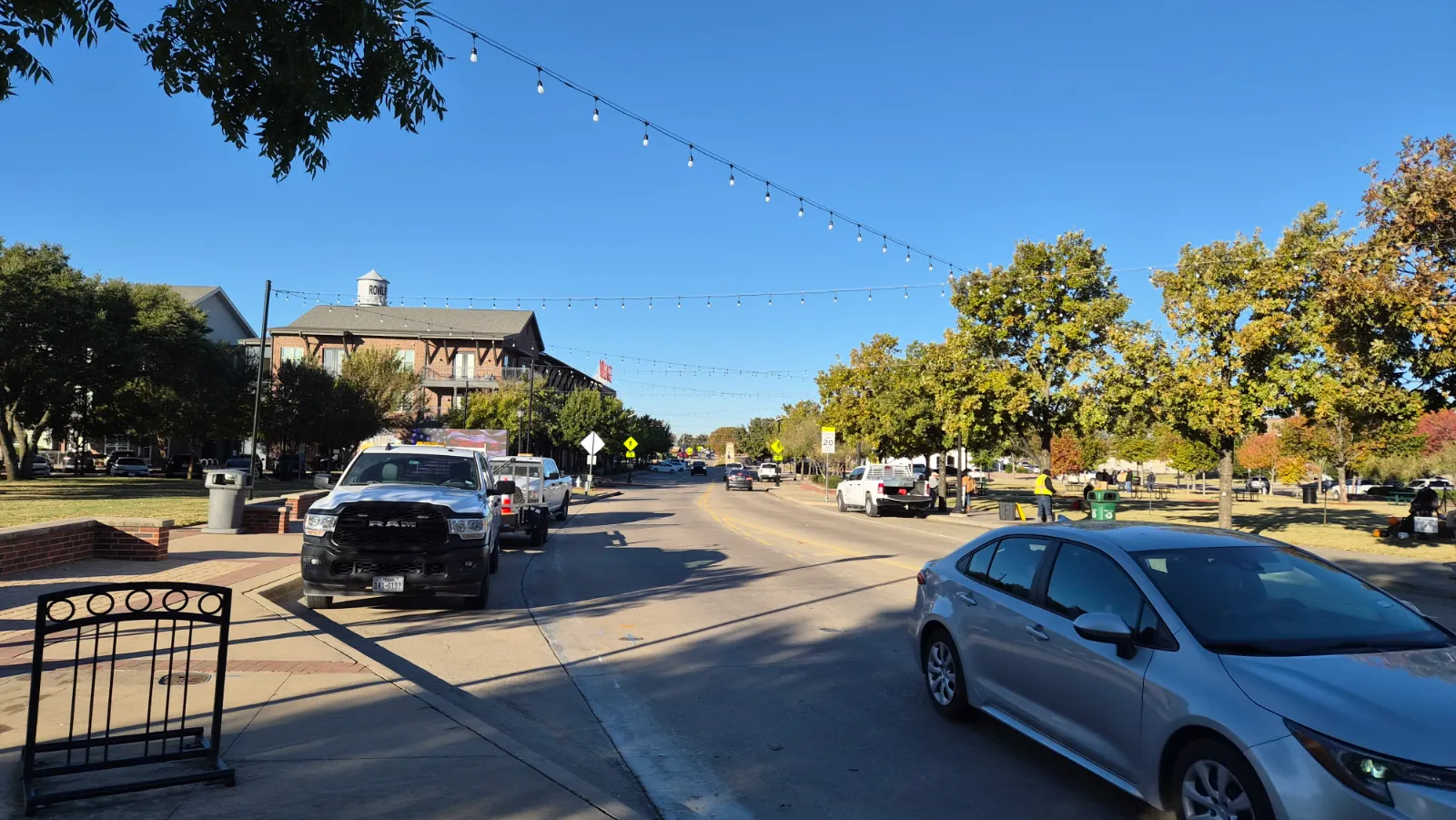
Both are useful. A good transportation system has a clear hierarchy: highways and roads for moving fast between places, streets for being in places, and a clean handoff between them.
A stroad tries to be both and fails at each
The term “stroad” comes from Charles Marohn, a civil engineer who founded the group Strong Towns. He coined it in 2011 for a street-road hybrid. His comparison is a futon: neither a particularly good couch nor a particularly good bed. A stroad is neither a good road nor a good street.
It has a road’s speed and width, plus a street’s constant access: driveways, side streets, parking lot entrances, and storefronts. That combination means:
- It doesn’t move traffic well. Every driveway and left turn slows things down, so the extra lanes don’t buy you much speed.
- It isn’t a good place. No one wants to sit at a cafe next to six lanes of 45 mph traffic, so you get drive-thrus and parking lots instead of a main street.
- It’s dangerous. Lots of conflict points, high speeds, and people on foot with nowhere safe to cross.
Speed is what makes it deadly
On a highway, nobody’s walking along the shoulder, so high speed is fine. On a street, people are everywhere, so speed has to stay low. A stroad mixes high speeds with people walking, biking, and waiting for buses.
That’s where the physics catches up. The AAA Foundation found that the average risk of death for a person hit by a car is about 10% at 23 mph, 25% at 32 mph, and 50% at 42 mph. A lot of our stroads are posted at 40 and driven faster.
Dallas’s 2022 Vision Zero plan found that from 2015 to 2019, only 2% of people walked to work, but pedestrians were 30% of traffic deaths. Many of those deaths happen at night, crossing major roads. The city’s Vision Zero plan has made progress, and 2025 was a much better year. But the design of these roads is a big part of the problem.
Why we keep building them
Stroads aren’t anyone’s evil plan. They’re what you get when engineers design every road for car speed and volume, and the city zones the land along it for strip retail with big parking lots up front.
Every business wants its own driveway. Every road gets widened to handle more cars. Over time the road gets wider and faster, the businesses get set back behind more parking, and walking along it gets worse. Nobody chose the result. It’s just where the defaults lead.
Strong Towns also makes a money argument I find convincing. Stroads are expensive to build and maintain, and the low-value strip development along them often doesn’t produce enough tax value per acre to pay for the road over the long run. I get into that more in Good Urbanism Isn’t Red or Blue.
How you fix one: pick a side
The fix for a stroad is to decide what it is.
Make it a road. If its real job is moving traffic between places, cut down the access. Fewer driveways, fewer turns across traffic, businesses on side streets and frontage instead of directly on the fast lanes. Then it can move cars safely.
Make it a street. If it runs through a neighborhood and people live and shop along it, slow it down. Narrower lanes, wider sidewalks, trees, safe crossings, and buildings that come up to the sidewalk. Let it become a place.
A lot of Dallas’s worst stroads probably need a bit of both: a calmer street for the neighborhood part, and better parallel routes for through traffic.
We already deck freeways. Why not more?
Dallas has proven it understands this at the freeway level.
Klyde Warren Park covers Woodall Rodgers and stitched downtown back to Uptown. It’s getting extended over more of the freeway. Southern Gateway Park is going over I-35E near the Dallas Zoo. And the city approved money so the I-30 rebuild through downtown can support future deck parks connecting downtown to the Cedars and South Dallas.
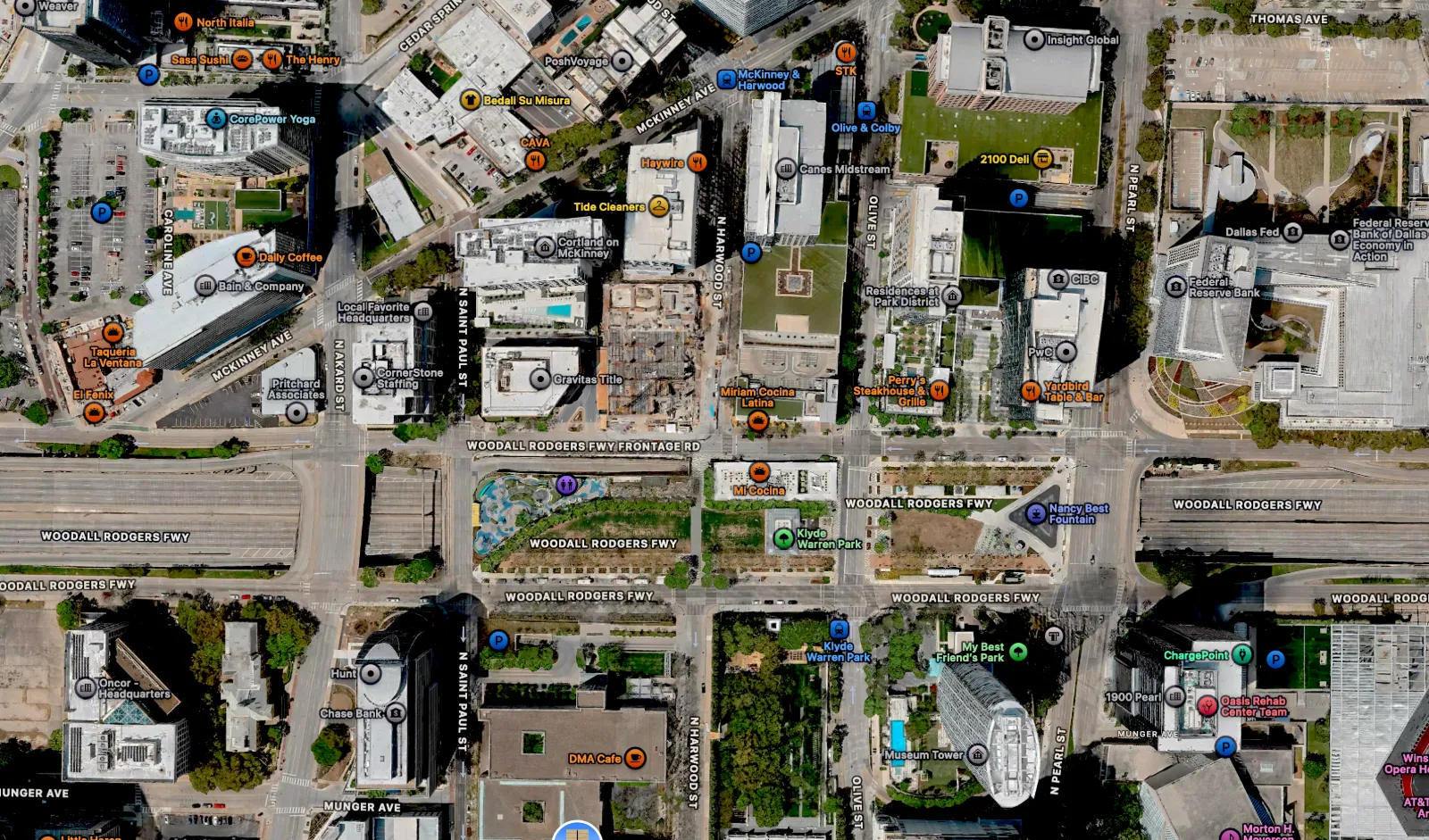
That’s the city admitting that a big road through the middle of neighborhoods cost us something, and paying to get some of it back.
So here’s my question: why stop at freeways? Some of our widest stroads cut neighborhoods apart just as badly. Not every one needs a park on top of it. But the same thinking applies. If a road is splitting a neighborhood, it’s worth asking whether it should be one.
Every road should know what it is
I’m not anti-road. I drive on them like everyone else. I want highways that work well, roads that move traffic between places, and streets where people actually want to be.
What I don’t want is what we have too much of: big, fast, dangerous roads lined with parking lots that fail drivers and everyone else at the same time.
Every road should know what it’s for. When it does, drivers get where they’re going and the neighborhoods along the way get to be neighborhoods again.