Explainer
You Can't Be a World-Class City Without World-Class Mass Transit
I ride DART in from Rowlett even though driving would be faster from my stop. Here's why I think trains matter so much for a city like Dallas, and why I stopped calling it public transit.
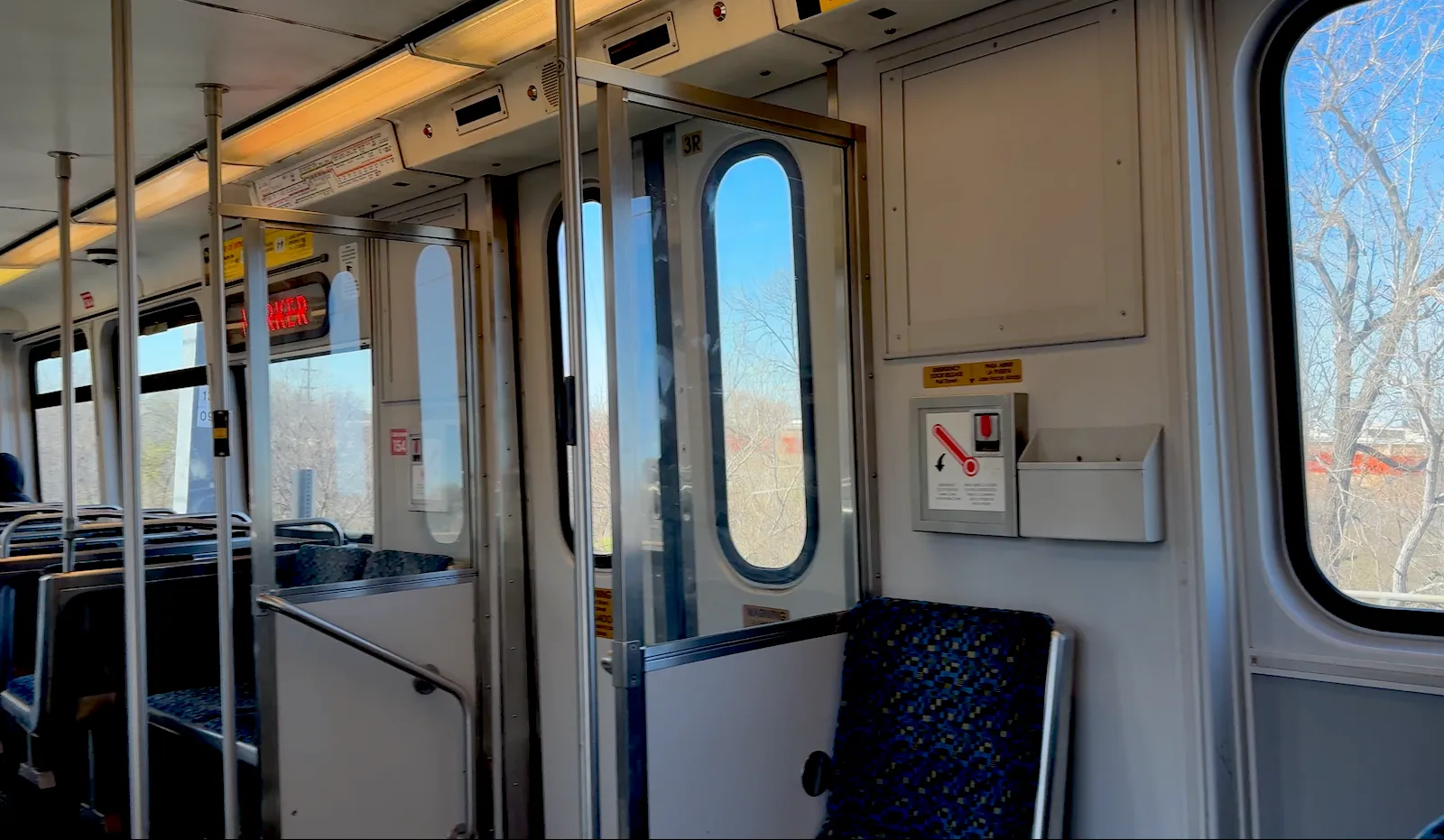
People keep telling me DART takes longer than driving. From my stop, they’re right. I ride in from Rowlett and transfer somewhere between Mockingbird and the West End. If I drove, I’d usually get there faster. Rowlett is my home station most of the time. That doesn’t tell people where I live. It tells them I get on at the end of the Blue Line, as far east as the train goes.
I still pick the train. No fighting traffic, no hunting for parking, no paying for it.
I get it if that’s not something you personally value. But this post isn’t really about my commute. It’s about why I think trains are one of the most important things a city like Dallas can have, and why I’ve said on X more times than I can count that you can’t be a world-class city without world-class mass transit.
This is part of a series on the fundamentals behind what I write here. It starts with What Makes a City Good?
I didn’t get it either, until I did
I wasn’t born a train guy. I’m a car guy. I run a car site. For most of my life the plan for any trip was the same: load everyone into the SUV and go.
My big eye-opening moment was a family vacation to DC in 2015. It was a full week. We left Dallas in our large three-row SUV, stayed the night in Nashville, then drove to Maryland the next day. The hotel was close to a train station. We spent four days in DC. The SUV stayed parked at the hotel the whole time, which was great, because driving into the city and driving back out was a pain. Metro and our feet got the family everywhere, kids included. The first day we made the mistake of going in at rush hour, so we rode packed trains. The whole family still enjoyed it.
On the way home we stayed a night in Chattanooga and went to the aquarium, then took a more southern route back to Dallas. I needed that SUV for the road parts. We would have seen more of Nashville and Chattanooga if those cities had better transit.
If I could have done that whole trip by train, I’d do it every year.
That’s the thing I keep running into when I argue about this online. Most people have never experienced it. They’ve never gotten to a city and gone everywhere they wanted on mass transit alone. They’ve never ridden a fast train from one big city to another. They complain about flying constantly, until you bring up trains. I was there once too.
A train lane moves a lot more people
Start with the simplest thing: space.
A city only has so much street. The question is how many people you can move through it. The National Association of City Transportation Officials puts it plainly in its Transit Street Design Guide: one lane of car traffic on a city street moves somewhere around 600 to 1,600 people an hour. A dedicated bus lane can carry up to 8,000. A transitway lane can serve up to 25,000 people an hour in each direction.
Same strip of land. Many times the people.
That’s the efficiency argument, and it wins in a lot of places. A train is repeatable, so the right-of-way can be compact and exact. A road needs extra room for shoulders, ditches, and setbacks. You move more people in less space, and the trains don’t have to be packed for that math to work. Need more capacity? Add rail cars, add trains, or run them more often. A subway can be tremendous if you can justify the cost.
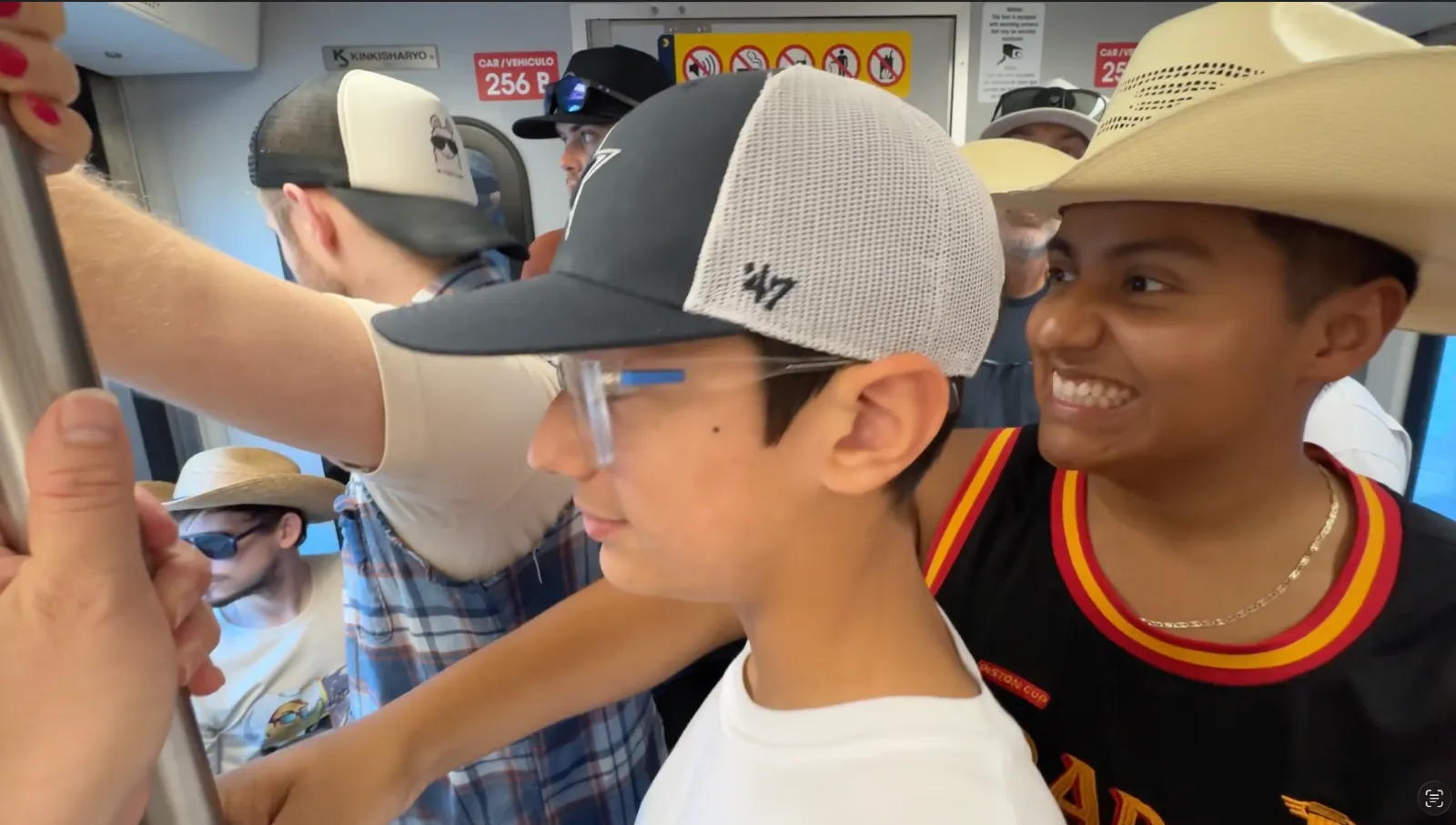
That’s the whole reason big cities around the world lean on rail. You can’t widen your way to that kind of capacity. Every new lane takes land, money, and maintenance, and it fills back up. (I get into that in I’m a Car Guy. Cars Are Still Bad for Cities.)
It has its own right-of-way
The second thing a train has is its own lane, all the way.
A bus in mixed traffic is stuck in the same jam as everyone else. A train on its own track isn’t. When I argue with people who call a train “a small step above a bus,” that’s my answer: a train has a dedicated right-of-way and five to six times the capacity, at higher speeds, and it’s way more efficient.
That’s also why Amtrak in Texas is such a bad example. The Texas Eagle shares tracks with freight, so it waits on freight. That’s not a train problem. That’s a right-of-way problem. I wrote about that in HB 270 isn’t a train. It’s permission to build one.
Rail is permanent, and that’s the point
People tell me a train only takes you where the rails go, and a car can go anywhere. That’s kind of the point. The train should take you from one destination to the next. Anything past that can be a walk, a bike ride, or a car.
Here’s something the urbanism world talks about a lot that took me a while to appreciate: a rail line is a promise.
A bus route can move next year. A train line won’t. That permanence is what gets people to build around it. A developer will put homes and shops next to a station because the station isn’t going anywhere. That’s how you get a place like Mockingbird, where you can walk off the platform into an actual neighborhood, or downtown Plano, which turned into a textbook example of rail plus good planning.
Not Just Bikes has a great video calling trams and light rail “walking accelerators.” They connect walkable places at street level and let a person on foot cover a lot more ground. I agree with almost all of it. If they’re built into the city correctly, trains are more efficient, cleaner, cheaper, and safer than any other kind of transit.
The catch is “built into the city correctly.” That’s most of what I complain about on this site.
Dallas already has the hardest part
DART runs 93 miles of light rail and 66 light-rail stations in nine of the 12 cities DART serves. (Highland Park voted to leave in May, which took the system down from 13.) For a region known for highways, that’s a lot of track. It was the longest light-rail system in the country for years, until Los Angeles passed it in 2022.
The rails are built. The four light-rail lines (Red, Blue, Green, and Orange) all run through downtown. The Silver Line doesn’t. We already paid for the expensive part.
What we haven’t done well is build the city around it. Too many stations sit in a sea of parking or next to a freeway with nothing to walk to. Trains come about every 20 minutes on weekdays, and worse on the Silver Line. And then people point at empty cars and say rail doesn’t work in Dallas. Transit isn’t failing in Dallas. The land use around it is.
Call it mass transit
I’ve mostly stopped saying “public transit.” I call it mass transit.
I don’t care how it’s funded. It’s the easiest and most efficient way to move a lot of people. We don’t call roads “public transit,” and they’re subsidized just as much, if not more. All transport is public transport. It’s all transportation infrastructure. Roads for cars are always going to be the least effective and most dangerous way to move a mass of people.
The word “public” does something sneaky. It makes the train sound like a charity service for people who can’t afford a car. I hear that all the time. I get called poor for riding DART. I’m not. When I ride, I see college kids, older folks, business people, families headed to the Fair, and travelers on the Silver Line to the airport. That’s what mass transit looks like when it works.
Every scale needs something different
When I talk about trains, people sometimes hear “rip out the highways and build subways everywhere.” That’s not it. I think about it in four scales:
- Inside the city: I’m open to everything. Robotaxis, buses, small buses, Uber, light rail, subway, and yes, people driving their own cars. Light rail and streetcars should connect the walkable neighborhoods.
- Regional: Heavy rail like TEXRail and the Silver Line should connect big cities to their big suburbs, airports, and stadiums.
- Statewide: Texas is a perfect place for high-speed rail between its major cities. Trains are amazing for large cities, and high-speed rail is amazing for connecting large cities.
- Nationwide: Dallas to LA by train isn’t that useful. Shorter linked legs, like Dallas to El Paso to Santa Fe to Tucson, could be.
Robotaxi in the city, train from city to city. That’s a future I’d actually use.
Safety and frequency are part of the deal
I’m not going to pretend DART is perfect. Some stops feel sketchy. Trains don’t come often enough. When people say transit “brings in bad people,” that’s an enforcement problem, not a train problem. Make it cleaner and safer and more people will ride. And more riders make it safer. When I ride the train, everyone else on that train is a little bit safer.
Frequency, safety, and reliability matter more than any ribbon cutting. A train every 10 minutes that feels safe will beat a shiny new line nobody trusts.
Why it matters
A city that only works by car only works for people who can drive, and only as well as the traffic lets it. Kids, older folks, people who can’t drive, people who’d just rather not on a given day: they’re stuck. Mass transit gives a city a second way to work.
I don’t hate cars. I’ll keep mine. But I’ve seen what it’s like to live somewhere you don’t need one for every trip, and I want that option here.
Dallas is one of the biggest cities in the country, in one of the fastest-growing regions. We already built the track. Now let’s run it like a world-class city would.