Explainer
Transit Isn't Failing in Dallas. The Land Use Around It Is.
Dallas built one of the biggest light-rail systems in the country, then surrounded a lot of the stations with parking lots and freeways. That's why some trains feel empty. Here's the line I repeat most, explained.
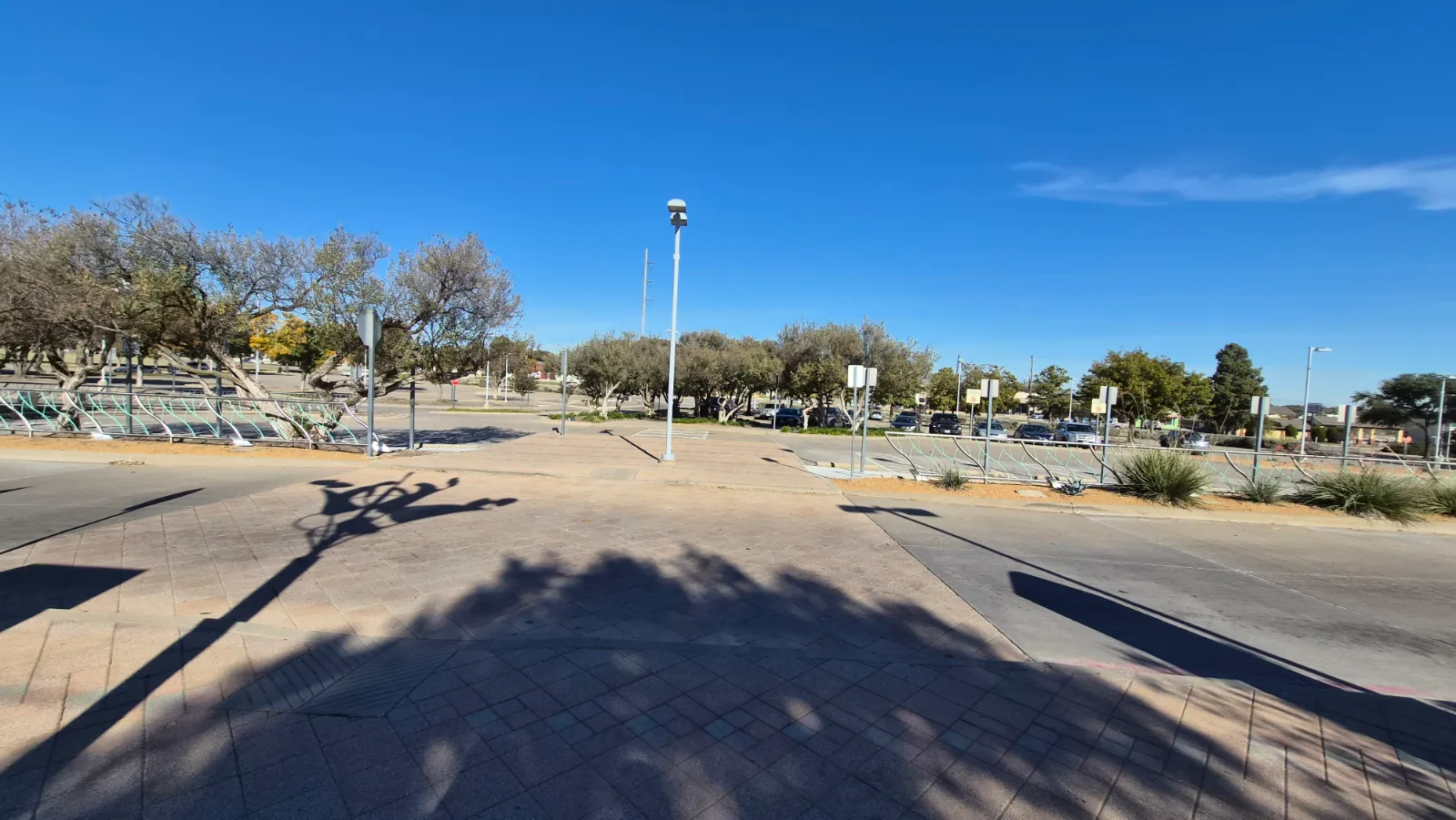
If I had to boil everything I believe about Dallas transit into one sentence, it’d be this one: transit isn’t failing in Dallas. The land use around it is.
I’ve repeated it in posts about downtown, DART’s parking lots, and the zoning rewrite. This is the post that explains it.
This is part of a series on the fundamentals behind what I write here. It starts with What Makes a City Good?
A train only serves the people who can reach it
Every rider starts and ends their trip on foot, on a bike, or in a car. A train is only as useful as what’s within reach of the platform.
So when people point at a half-empty train and say rail doesn’t work in Dallas, I ask them to look at what’s around the station it just left. A lot of the time, the answer is a parking lot, a freeway, a fence, and a six-lane road you wouldn’t want to cross on foot. Nobody lives there. Nothing is there to walk to. Of course the train is empty.
That’s not a train problem. That’s a land-use problem. And land use is something the city and DART control.
Transit and density are a package
I wrote this line in an essay a while ago and I still think it’s the clearest way to say it:
Transit without density is charity. Density without transit is punishment.
Run trains through places where hardly anyone lives or works, and they struggle, look empty, and get labeled a failure. Pile up housing and jobs with no good way to get around, and people sit in traffic, hate it, and blame density.
You need both, together, in the same places. Transportation and land use aren’t two conversations. They’re the same conversation.
Dallas built the track and forgot the neighborhoods
DART has 93 miles of light rail and 66 light-rail stations. For a region built around highways, that’s a huge investment, and the four light-rail lines (Red, Blue, Green, and Orange) all run through downtown. The Silver Line doesn’t.
But a lot of stations were designed first as park-and-rides. Drive to the station, park, ride downtown, drive home. That made sense for a commuter system. It’s also why so many stations sit inside big surface lots with nothing around them.
When I rode seven stops on the Blue Line, the difference was obvious:
- Downtown Garland lands in a real downtown. Brick streets, the square, restaurants. You step off the train and you’re somewhere.
- Forest/Jupiter is the opposite. The train shows up, and the city never did. Parking, wide roads, fences, and not much to walk to.
- LBJ/Skillman has thousands of people living nearby in apartments, but the walk from those apartments to the platform is rough enough that a lot of them won’t do it.
- Mockingbird is where the line works best: retail, apartments, SMU, and a trail, all within a short walk.
Same train. Same frequency. Wildly different results. The difference is what the city allowed and built around each stop.
Where we got it right, rail works
The good examples are already here.
Mockingbird has been one of the strongest stations on the system for years, and now DART is putting 394 apartments on its old surface lot and moving rider parking underground. At Buckner, 304 mixed-income homes are going up on what was an underused DART lot.
Downtown Plano is the suburban version. The city invested around its station and it’s become a textbook example of how rail plus good planning equals revitalization.
DART has said for years that rail has drawn billions in private development near its stations. Imagine how much more there’d be if the zoning around every station invited it instead of fighting it.
Parking lots are the clearest example
Here’s a number that says it all. At Westmoreland Station, DART counts 672 surface parking spaces and figures riders need about 125. That’s hundreds of spaces’ worth of land next to a train platform that could be homes, shops, and jobs.
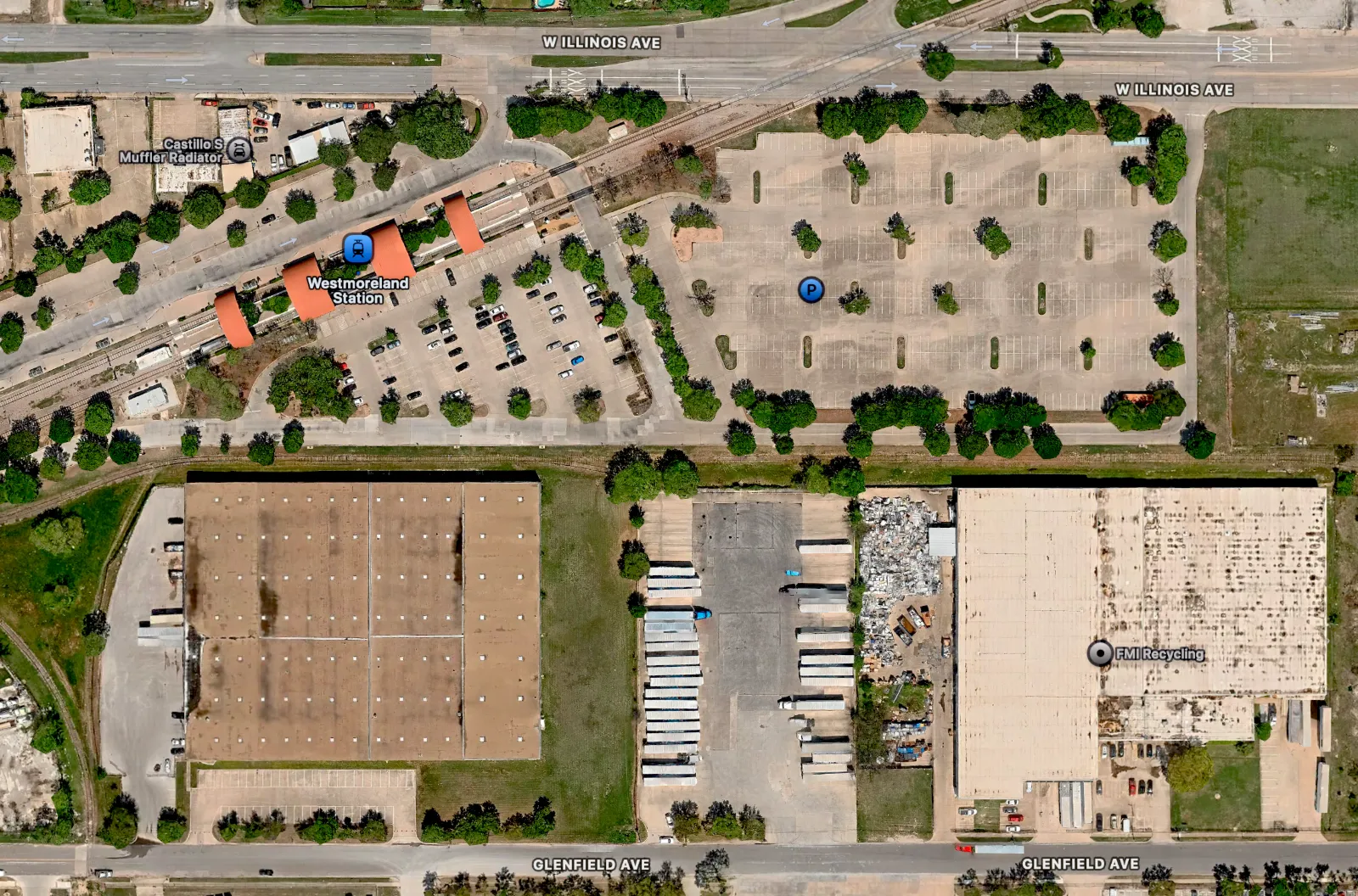
When DART looks at a station, the first question shouldn’t be how many cars it can store. It should be how many homes, shops, and jobs can sit next to the platform without killing the ride.
Keep a garage for the people who drive to the train. Put people where the rest of the asphalt is.
What transit-oriented development actually means
You’ll see “TOD” all over my posts. It stands for transit-oriented development, and it’s simple: build the kinds of places people want to live, work, and shop within an easy walk of a station.
In practice that means:
- More homes near the platform, at every price point and size, including family-sized units.
- Daily needs on the ground floor: groceries, coffee, a pharmacy, places open after five.
- Short, connected streets and safe crossings so the walk to the train is direct.
- Buildings that face the street and the station, not blank walls and garages.
- Less required parking, because the train is right there.
It’s not only groceries, coffee, and a pharmacy. Things that would feel just as natural to Texans are an ice cream shop or shaved ice, or a convenience store, like a 7-Eleven without the gas.
That’s not radical. It’s how most cities were built before the car, and it’s how the stations that work in Dallas already look.
Draw a circle around every station
For years I’ve said one of the quickest things Dallas and DART could do for ridership is to create special zoning in a half-mile to one-mile radius around every station, encouraging density and car-light neighborhoods. I’ve asked for TOD zones with no parking minimums, a half-mile from every DART station to start.
The city’s zoning rewrite draft finally does a version of that. Within a half-mile of light-rail and streetcar stops, it allows more height, more homes in residential districts, parking maximums, and wider sidewalks. I wrote about why that matters, and why it can’t get watered down, in Dallas Finally Drew a Circle Around the Stations.
Put the transit first
There’s one more lesson I keep coming back to, from a CityEd video about HafenCity in Hamburg. They built the metro line first, then let the new district grow around it. For a few years the stations sat next to construction lots and looked a little ridiculous. Now the neighborhood is there and the train already works.
Dallas doesn’t get many chances to do that. The arena districts are good ones. We already do the highway version. We build a huge highway out into farmland, and then the land develops around it. I wish they had thought this way before Frisco and McKinney were built out like they are now.
We tend to do it backwards. We build a huge new district, an arena, or a mall redo first, then figure out transit later, if ever. That’s how you get a car-dependent place people can’t get to without driving. For the next big Dallas-area development, the first question should be: where’s the station?
The fix is in our hands
The good news is that the expensive part is done. The track is laid. The trains run. What’s left is mostly zoning, parking rules, and what DART does with its own land, and those are decisions the city council and DART board make every year.
Frequency, safety, and reliability still matter. But a train that pulls into a neighborhood will always beat one that pulls into a parking lot.
Transit isn’t failing in Dallas. We just haven’t finished building the city around it.