Explainer
I'm a Car Guy. Cars Are Still Bad for Cities.
I love cars. I run a car site. I'm not taking anyone's car away. But a city built so you need a car for every trip is expensive, dangerous, and stuck in traffic it can't build its way out of.
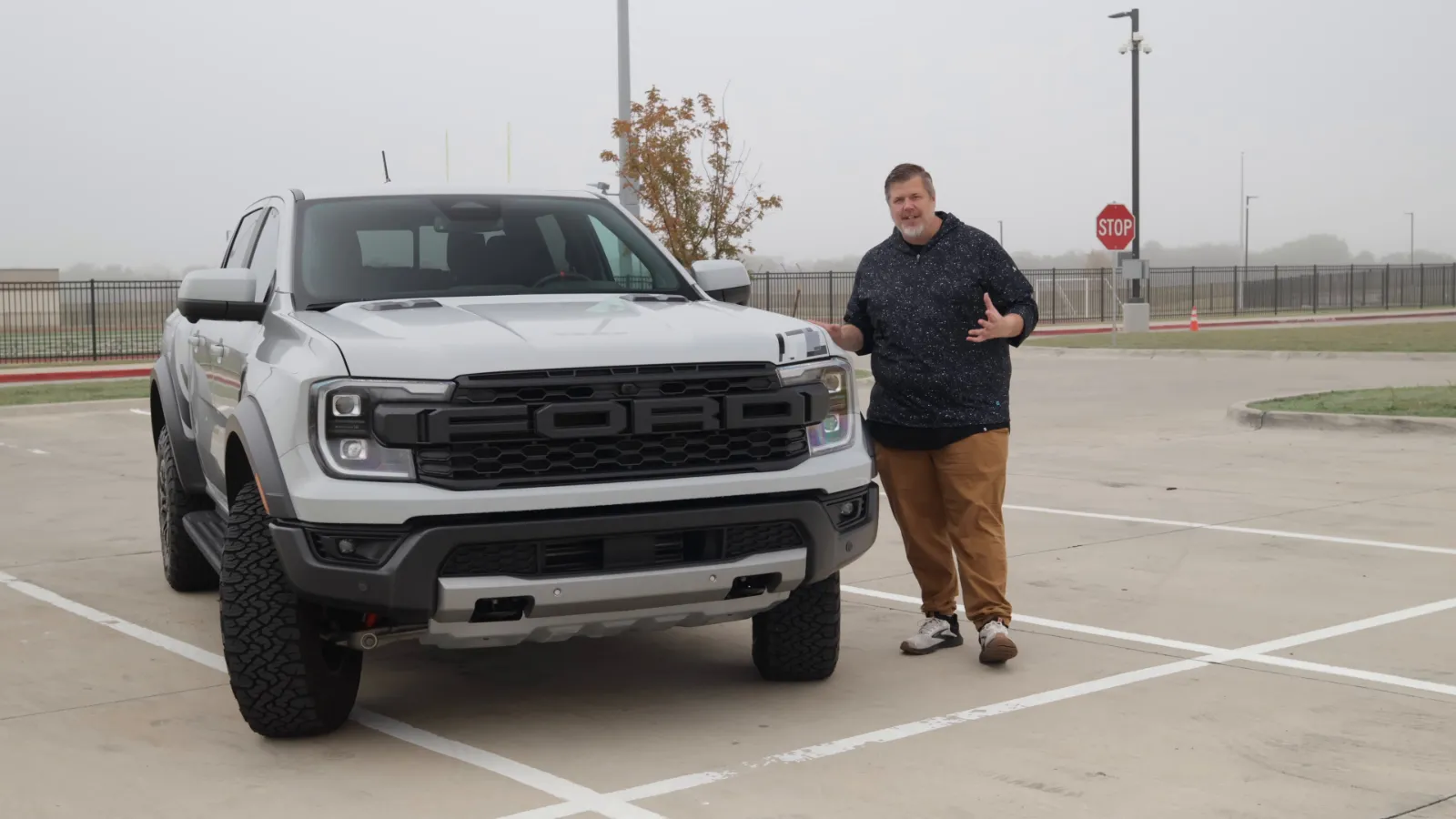
Let me get this out of the way first. I’m a car guy. Love cars, love racing, hate traffic and day-to-day commuting. I run a car site, TXGarage. I own cars, and I’m keeping them.
I’m also convinced that cars are bad for cities. Not cars themselves. Cities built so you need one for every single trip.
Those two things aren’t in conflict. As I’ve said before, I don’t hate cars. I hate that I have to own one.
This is part of a series on the fundamentals behind what I write here. It starts with What Makes a City Good?
Dallas is a car city because we built it that way
You’ll hear people say Dallas is a car city and that’s just how people here like it. That’s a circular way of thinking about it. It’s a car city because we made it nearly impossible to do anything else.
We zoned most of the city so homes, shops, and jobs can’t mix. We required parking for nearly everything until last year. We built wide, fast roads through neighborhoods. Then everyone drove, because there was no other real option, and we called that a preference.
Fixing that doesn’t mean forcing anyone onto a train. It means making what we have better for the people who want a choice.
Cars take up a lot of space
The first problem is simple geometry.
A car is about the size of a small bedroom, it usually carries one person, and it needs a place to sit at every end of every trip. At home, at work, at the store, at the restaurant. Most cars spend most of the day parked.
It’s even worse in Texas. People here don’t just like trucks and big SUVs. They like Super Duty trucks and really large SUVs, and they drive them like race cars.
When you move people that way, you run out of room fast. One lane of car traffic on a city street moves roughly 600 to 1,600 people an hour, according to the National Association of City Transportation Officials. A dedicated transit lane can move many times that. That’s why every big, successful city in the world leans on something other than cars to move most people downtown. There isn’t enough land to do it any other way.
You can’t widen your way out of traffic
Texas has run this experiment for us.
Houston widened the Katy Freeway to as many as 23 lanes in places, for more than $2.8 billion. It was supposed to fix one of the worst bottlenecks in the country. Travel times dropped at first. Then they came back and kept going. On one stretch, the drive took up to 51% longer after the widening.
Widening also uses up land that could have been a small street, with tree cover and a wide sidewalk. More pavement means more runoff, and Dallas already struggles with that.
That’s called induced demand. Make driving easier and more people drive, more often, from farther away, until the road fills back up. It’s not a theory urbanists made up. It’s what keeps happening.
Here, Dallas-Fort Worth drivers spent 69 hours sitting in traffic in 2024, four more than in 2019, according to the Texas A&M Transportation Institute. We’ve spent decades and billions widening roads around here. The traffic is still there.
That’s why I keep saying build the train and you’ll spend less constantly fixing the road.
Cars are dangerous, and we’ve accepted it
This is the part that bothers me most.
TxDOT points out that November 7, 2000, was the last day nobody died on a Texas road. Every single day since then, at least one person has been killed in a crash. More than 95,000 people in all. In 2025 alone, Texas recorded 3,769 traffic deaths, according to TxDOT’s 2025 Crash Facts, and that was the good news, down 9.38% from 4,159 the year before.
Imagine if that many people died on trains. We’d shut the system down. With cars, we call it an accident and move on.
Speed is a big part of it. A person hit at 23 mph has about a 10% chance of dying. At 42 mph it’s 50%. A lot of Dallas streets that people live and walk along are designed for 40-plus.
When people tell me DART isn’t safe, I’ll take that seriously, and I have. But I’d rather be on a train with someone who smells bad than on the road with some of the drivers we let keep their licenses.
Cars are expensive, for you and for the city
AAA estimated that owning and operating a new car cost $11,577 a year in 2025, about $965 a month, once you add depreciation, insurance, fuel, and maintenance. A pickup or SUV costs more. Multiply that by two or three cars per household and you’re looking at one of the biggest bills a family has.
And the cost doesn’t stop with the car. Every one of those cars needs parking everywhere it goes, and parking isn’t free. A UCLA analysis of 2025 construction costs found an aboveground garage space averages about $52,000 to build, and an underground one about $73,000, before you count the land. That cost goes into your rent, your groceries, and the price of every new building, whether you drive or not. Dallas’s own staff estimated a required parking space adds $100 to $200 a month to rent or a mortgage.
Then there’s the city’s side. Spread-out, car-only development means more miles of road, pipe, and wire per person, all of which the city has to maintain forever, paid for by fewer taxpayers per mile. If everyone has to own a car just to get around, we’re subsidizing the cars and the roads even more. People talk about subsidizing transit and skip the fact that the way they get around right now is subsidized too. It just isn’t the kind of subsidy they mean.
I get into that in Good Urbanism Isn’t Red or Blue.
Cars split neighborhoods apart
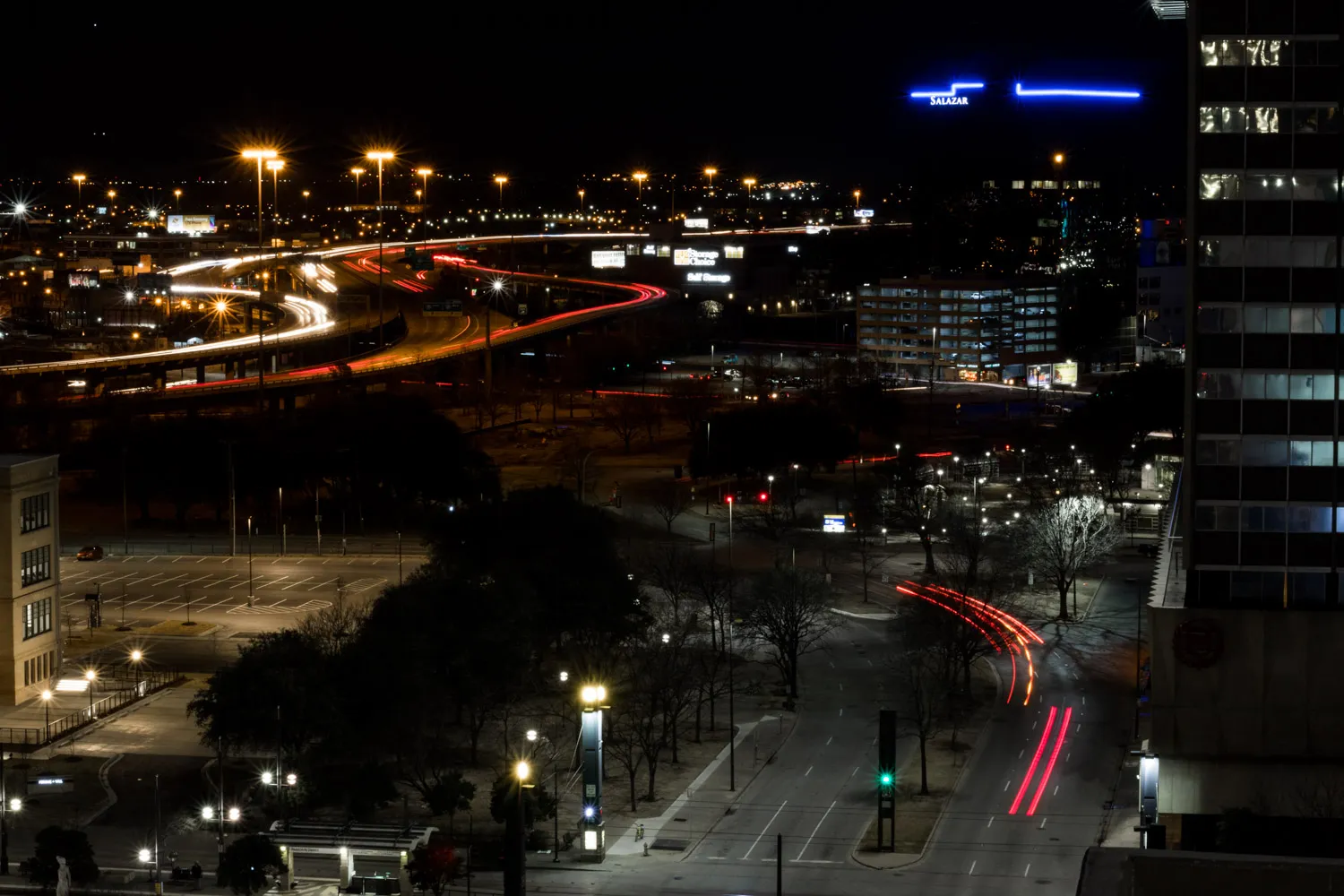
Freeways didn’t just get built near Dallas neighborhoods. Some of them got built through them. I-30 cut the Cedars and South Dallas off from downtown. I-345 walls off Deep Ellum. Woodall Rodgers separated downtown from Uptown until we covered part of it with Klyde Warren Park.
The fact that we’re now spending real money to put deck parks back over those freeways tells you what we lost when we built them.
What about Waymo and Tesla?
I’m a tech guy too. I love robotaxis and the technology behind them. Inside the city, I’m open to everything: robotaxis, buses, Uber, light rail, subway, and people driving their own cars.
But self-driving cars don’t solve the real problem a city faces, which is single-occupancy cars taking up space. A robotaxi is still a car. It still needs a lane and a place to wait. It can’t be real regional transportation. A city like Dallas should be an all-of-the-above approach, not a bet on one gadget.
Nobody is taking your car away
This is where I lose some people, so I want to be clear.
Good news is no one is taking your car away. I’m not asking for that, and I’d fight anyone who was.
What I want is a city where driving is a choice instead of a requirement. Where a teenager can get to a job without a car. Where an older parent can still get groceries after they stop driving. Where a family can get by with one car instead of three. Where I can take the train to a game, a concert, or the Fair, and drive to the lake on the weekend.
The irony is that drivers win too. Every person who walks, bikes, or rides the train is one less car in front of you at the light and one less car fighting you for a parking space.
I love driving. I just don’t love being forced to do it.